How many times have you enjoyed reading a story where Karma catches up to the bad guy? You smile and say to yourself, "I wish (add your own nemesis here) would get what's coming to him/her."
Wish no longer, give them what they deserve. Write them into your book. It's the perfect writer's revenge. You can enjoy the long-awaited payback, cause embarrassment, pain, and even death, in the privacy of your home with no repercussions. Whether you use a short story or a novel, I guarantee the satisfaction will be awesome. I've taken care of a few people that way and they never knew what hit them. You needn't make the identity of the person obvious, if you're concerned about that. The fact that you know their identity is all that's necessary.
On the other hand, you might want the connection to be fairly clear. I'm pretty sure one of my targets of retribution will never read my book, but if they do, I know they'll recognize themselves immediately. That thought makes me want to purr.
Maybe you think I'm being unduly cruel. Too bad. I'm the writer. It's my book. And, payback is a bitch!
If you want to read more about my revenge tactics, check out my post on www.mostlymystery.com called "This Writer's Revenge".
Wednesday, May 7, 2014

Tuesday, May 6, 2014
A Writing Conference Tale
 |
| Morning Coffee |
Excited flutters tickle my spine as I watch each conference patron arrive in the lobby. I turn to my friend Dianne, sitting beside me, with a giggle. She responds with a huge smile.
This is my third RWA conference, Dianne's second. This year, two others from our writing group will join us, Lisa and Rachel. As the noise level increases, I give up on typing and play the game of trying to recognize acquaintances from former years.
This conference is shorter than most but packs an awesome punch. The registration includes an eight-minute session with an agent or an editor who has read a blurb about your book and five pages of your work. I have high hopes.
Lisa and Rachel arrive and my excitement ramps up a notch. Knowing the workshops will begin shortly, we sit down and hash over which ones we want to take. Buoyed by excited anticipation, I start the conference journey.
 |
| Lisa, Me, Dianne, Rachel |
At the end of each class I meet with my cronies and we discuss the valuable information we've received. One of the things I love about these events, is the easy camaraderie with other writers.
During dinner, I introduce myself to others at the table and exchange business cards. I listen to the speaker, Bella Andrade, who's left a book on each of our seats. A wildly successful author, she gives us inspiration and motivation.
It's the end of the first day. I head off with my friends to a quiet corner to discuss our experiences. We share valuable nuggets gleaned from the workshops, and pass along funny people stories. I love how our group bands together to help each single person.
Later, my roommate and I discuss our pitch strategies in our p.j.s. As we talk our stories out, my fear lessens. I can't believe it when I see 11:30 on the clock. I'll never get up at 6:00 a.m.
Surprise! Nervous energy wakes me up before the alarm. My editor session isn't until 10:40 this morning, but I'm already breathing too fast. Breakfast seems noisier than the previous dinner. Anxiety hovers over each table. We all want to sell our work.
I volunteer to help out at the Editor and Agent appointments, an effort that quiets my nerves. I'm too busy to worry. A little wave of sheer terror does envelop me, though, as I sit in front of the editor, and, by the time I finish giving her the gist of my story, my throat needs water.
I hold my breath, waiting. She smiles and asks me for a synopsis and three chapters. YIPPEE!
My friend Dianne walks out looking shell-shocked. She has a request for a synopsis, her WHOLE book, and an overview of her series. WOW!
The news is so enervating that I'm ready to use it as an introduction to the story I'd like to write, "How I Sold My First Book". What the heck. I'm in a positive mood.
Is there a moral to this story? I've got two. "Never Give Up" and "Writing Conferences Work!"
Sunday, April 20, 2014
Humorous Paranormal?
Hmmmm. I just found out that Mystery and Horror, LLC is hosting two short story contests. Unfortunately, the deadline is May 1st and I don't have anything ready to contribute.
One contest is looking for Historical Mystery short stories for that anthology. The other contest, will publish winners in their Humorous Paranormal anthology.
Humorous Paranormal? Sounds like fun. Although, I've always concentrated on the horror side of paranormal, I love to add add humor to my characters' lives. I'd like to try a little comedic twist to the paranormal, but the deadline is only ten days away. Too little time since I'm preparing a manuscript for the NECRWA conference on the 3rd of May.
But, you might have time. Check it out: ShortStorySubmissions.
Good Luck!
One contest is looking for Historical Mystery short stories for that anthology. The other contest, will publish winners in their Humorous Paranormal anthology.
Humorous Paranormal? Sounds like fun. Although, I've always concentrated on the horror side of paranormal, I love to add add humor to my characters' lives. I'd like to try a little comedic twist to the paranormal, but the deadline is only ten days away. Too little time since I'm preparing a manuscript for the NECRWA conference on the 3rd of May.
But, you might have time. Check it out: ShortStorySubmissions.
Good Luck!
Saturday, April 19, 2014
Speak Up!
This week, I wrote a blog about dialogue at MostlyMysteryBlog. I've always enjoyed writing dialogue, but I never knew what an important tool it can be.
Have you ever wanted to ramp up your character's emotions but you run out of adjectives? This can happen when you're writing in the third person. Or, if you're like me, you might have to watch out for the old telling vs. showing.
One easy solution to the problem is dialogue. If you have John slam his hand down on the counter and say, "Damn!" That certainly shows anger. And, if you have him think, It isn't fair. Dave always gets the girl. The reader understands that John is ticked at Dave for winning the prize once more.
What if you had John telling Dave how he feels?
"Since when is it okay to steal someone's date?"
"What are you talking about? You just met her an hour ago. Did you ask her out?"
"I would have if you hadn't butted in."
"You introduced me to her, for crying out loud."
"What was I supposed to do? You barged in and sat down."
"You were sitting at the bar."
"I saw her first."
"Yeah, and she gave me her number."
"Damn! it isn't fair. You always get the girl."
Now, you can see what really happened. John is jealous of Dave because the girls prefer him. Perhaps the person on the other end of his anger shouldn't be Dave but himself. Depending on the dialogue, you can make John look like the injured party, a good sport, or even pathetic. Dave can be a pal, clueless, or a self-serving jerk. And, by the way, you've added a lot more words to your manuscript.
Dialogue paints a more in-depth picture of a scene and its characters. I love it because I learn more about my characters through their verbal interaction. In one of my scenes, I had two characters meet for the first time. I wanted it to be a cordial meeting of neighbors, but it quickly disintegrated into a threatening situation. I hadn't realized that one of the people was so nasty and petty until I heard her in conversation with the other.
In another instance, I found one of my characters, a very nice person, had a devious bent to her personality. It came out as she was saying one thing but thinking something very different.
With specific speech used in a conversation, the length or brevity words and sentences can increase tension and evoke emotions. If you're having trouble with dialogue, look back at books you've read where the dialogue moves the story along. See how that author did it.
I always speak out loud to hear how my conversations sound. There are also good books on the subject, or try the great online resources .
And, then there's always the old "tried and true". To understand how dialogue works, listen to it!
Keep on writing!
Have you ever wanted to ramp up your character's emotions but you run out of adjectives? This can happen when you're writing in the third person. Or, if you're like me, you might have to watch out for the old telling vs. showing.
One easy solution to the problem is dialogue. If you have John slam his hand down on the counter and say, "Damn!" That certainly shows anger. And, if you have him think, It isn't fair. Dave always gets the girl. The reader understands that John is ticked at Dave for winning the prize once more.
What if you had John telling Dave how he feels?
"Since when is it okay to steal someone's date?"
"What are you talking about? You just met her an hour ago. Did you ask her out?"
"I would have if you hadn't butted in."
"You introduced me to her, for crying out loud."
"What was I supposed to do? You barged in and sat down."
"You were sitting at the bar."
"I saw her first."
"Yeah, and she gave me her number."
"Damn! it isn't fair. You always get the girl."
Now, you can see what really happened. John is jealous of Dave because the girls prefer him. Perhaps the person on the other end of his anger shouldn't be Dave but himself. Depending on the dialogue, you can make John look like the injured party, a good sport, or even pathetic. Dave can be a pal, clueless, or a self-serving jerk. And, by the way, you've added a lot more words to your manuscript.
Dialogue paints a more in-depth picture of a scene and its characters. I love it because I learn more about my characters through their verbal interaction. In one of my scenes, I had two characters meet for the first time. I wanted it to be a cordial meeting of neighbors, but it quickly disintegrated into a threatening situation. I hadn't realized that one of the people was so nasty and petty until I heard her in conversation with the other.
In another instance, I found one of my characters, a very nice person, had a devious bent to her personality. It came out as she was saying one thing but thinking something very different.
With specific speech used in a conversation, the length or brevity words and sentences can increase tension and evoke emotions. If you're having trouble with dialogue, look back at books you've read where the dialogue moves the story along. See how that author did it.
I always speak out loud to hear how my conversations sound. There are also good books on the subject, or try the great online resources .
And, then there's always the old "tried and true". To understand how dialogue works, listen to it!
Keep on writing!
Wednesday, April 2, 2014
Hybrid Publishing

Tuesday, April 1, 2014
Publishing Pitfalls
Last Saturday I attended an all-day workshop on publishing put on by Sisters in Crime (SinC). The panels discussed Small Press (Indie), Traditional (Legacy), and Self-Publishing. Authors explained the benefits and down-sides of each.
Indie publishers have the advantage of a quicker turn-around time and most don't require agents. However, the author has to take care of tasks like promotion and cover art.
Legacy publishers take care of publicity, editing, cover art, and bookstore distribution. Their downside includes the necessity of an agent, early deadlines, lack of flexibility, and the amount of time it takes to produce the book.
That leaves self-publishing. Many authors claim to have made a lot of money with self-publishing. If you look at the claims, you'll find that most come from previously established authors who already have a following.
For those of us who are unknown, the story will be quite different. Before any author takes the risky step of self-publishing his book, he has to establish a platform. A platform is an online identity, created by Social Media (Facebook, Twitter, LinkedIn, Pinterest, etc.) and a blog.
People will buy something written by a familiar name, once. If they like it, you're in luck. This brings me to an important part of self-publishing, the editing. Before you send anything out onto the web with your name attached to it, hire a competent editor to go through it. Don't cry about the cost. Do it! Reader's are not used to literature that has spelling or grammatical errors. One or two in 75,000 words can be overlooked, but no more.
We new authors are still learning, and we need someone to point out problems before the public sees them. Editors do that. Once your name is associated with sub-par work, you've blown it. You won't get another chance. There are too many books out there.
Be prepared to take care of all those little details normally handled by the publisher. Things like cover art, promotion, technical aspects of formatting for different platforms, ISBN numbers, etc. Learn about quotas, royalties and keeping tabs on your sales. You're now in the business of publishing.
You can hire people to take care of any or all of the publishing responsibilities, but it will be costly.
The bottom line? Look at the publishing choices and make an informed decision, one for which you are willing to do the work and then enjoy your new published state.
For more information on the workshop, see my blog this Friday, 4/4, at MostlyMysteryBlog.
Indie publishers have the advantage of a quicker turn-around time and most don't require agents. However, the author has to take care of tasks like promotion and cover art.
Legacy publishers take care of publicity, editing, cover art, and bookstore distribution. Their downside includes the necessity of an agent, early deadlines, lack of flexibility, and the amount of time it takes to produce the book.
That leaves self-publishing. Many authors claim to have made a lot of money with self-publishing. If you look at the claims, you'll find that most come from previously established authors who already have a following.
For those of us who are unknown, the story will be quite different. Before any author takes the risky step of self-publishing his book, he has to establish a platform. A platform is an online identity, created by Social Media (Facebook, Twitter, LinkedIn, Pinterest, etc.) and a blog.
People will buy something written by a familiar name, once. If they like it, you're in luck. This brings me to an important part of self-publishing, the editing. Before you send anything out onto the web with your name attached to it, hire a competent editor to go through it. Don't cry about the cost. Do it! Reader's are not used to literature that has spelling or grammatical errors. One or two in 75,000 words can be overlooked, but no more.
We new authors are still learning, and we need someone to point out problems before the public sees them. Editors do that. Once your name is associated with sub-par work, you've blown it. You won't get another chance. There are too many books out there.
Be prepared to take care of all those little details normally handled by the publisher. Things like cover art, promotion, technical aspects of formatting for different platforms, ISBN numbers, etc. Learn about quotas, royalties and keeping tabs on your sales. You're now in the business of publishing.
You can hire people to take care of any or all of the publishing responsibilities, but it will be costly.
The bottom line? Look at the publishing choices and make an informed decision, one for which you are willing to do the work and then enjoy your new published state.
For more information on the workshop, see my blog this Friday, 4/4, at MostlyMysteryBlog.
Thursday, February 13, 2014
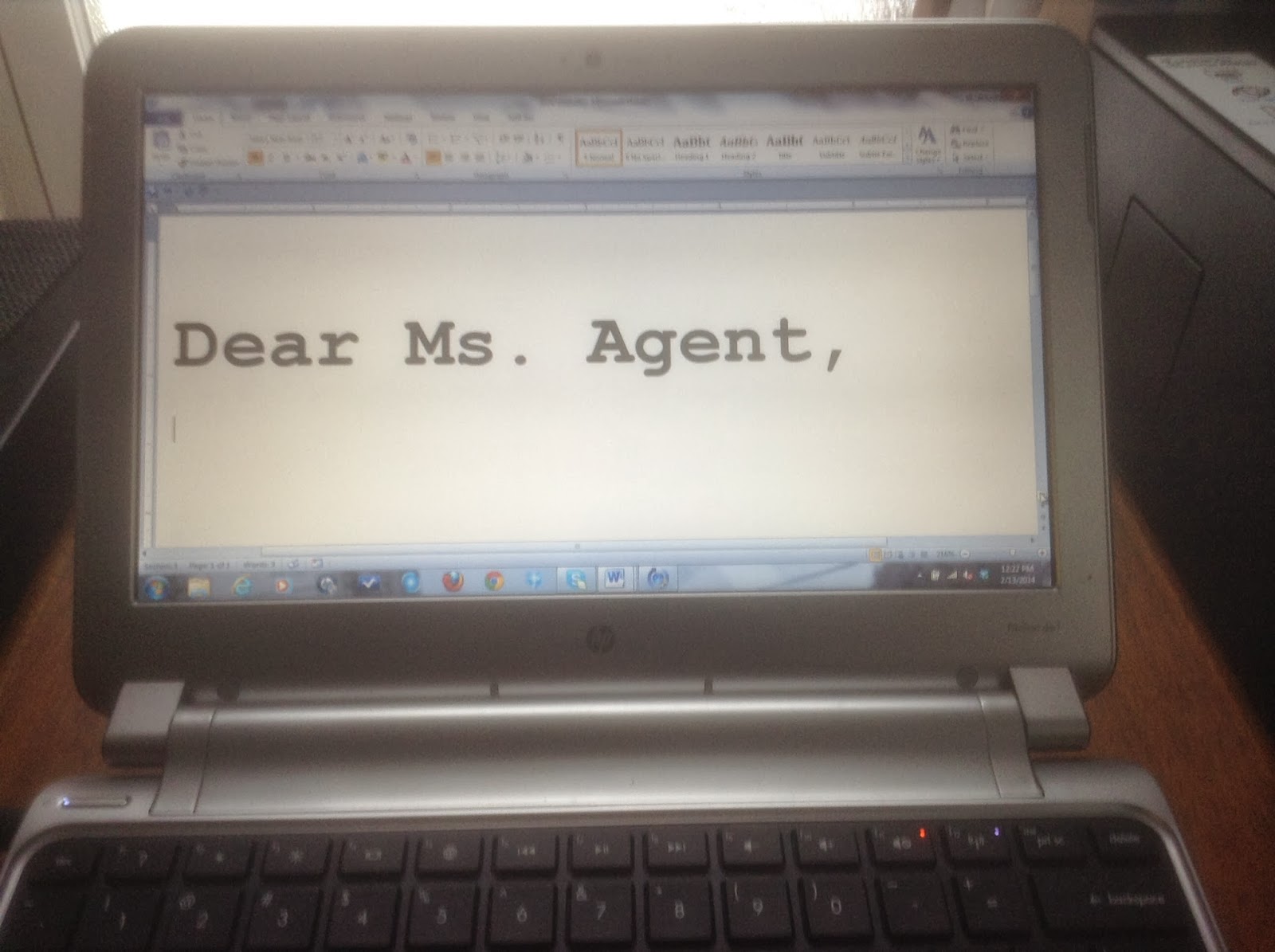
Ready to Query?
I've been asking myself that
question for months. Am I ready to query? Well, if I want to be published, I figure I’m
probably going to have to do something other than pray.
.JPG)
The answer to the query question isn't easy. Although my book is great (you’ll love it), I’m still doing some
in-depth editing. But, what difference does that make? I could still send out query letters. Right?
I could. But, what if by some
miracle, I get a reply asking me for the whole thing? What do I do? Do I send
my baby out before it’s ready? Do I take a chance that the editor or agent will
gloss over any mistakes or inconsistencies because my writing is so incredible?
Wait a minute. If someone
wanted my work, I could always throw myself into an insane editing marathon and
hope that everything would somehow end up being perfect. Right?
Yeah, right. My life would be a
mess, not to mention what a manuscript, edited by a bleary-eyed lunatic, would
look like. No, no editing marathon. Much
better to work on my masterpiece until it’s ready for the firing squad. Also,
this way, I’d have less chance of cultivating an ulcer.
Although my work isn't quite
ready for querying, it is close. And, I know that writing a query letter is
extremely difficult. The process has been known to demoralize even the most
confident writer. Therefore, I wouldn't attempt it alone. Especially since my
confidence can be iffy. I tend to moan while waiting in line to pitch my book.
There are many sites where you
can find excellent instruction about how to query. Here are three I like:
Since I've read a lot of these articles, I've learned how to query. Right?
I'm sure you guessed the answer. No. I’m still in novice land. What I need, what a lot of
writers need, is feedback, someone to read my pitiful query attempts and point
out the problems. Where do you find someone like that?
One venue is a writing group. A
good writing group will have members who’ll give you an honest critique. If they've had any experience writing query letters, their help can be invaluable.
Often, however, group members’ experience with query letters is spotty. And, what
if you don’t have a writing group? If you're not part of a writing group, my advice is to search for one. I have an
online critique group through the Sisters in Crime Guppies subgroup and a
physical writing group near my home.
Another really good option to solve
your query concerns is to find an online workshop where you can get feedback on
your letter. You’ll find them advertised through writing forums from time to
time. I’m considering taking one next week from Savvy Authors. Savvy'sQueryWorkshop
It’s inexpensive, looks to be thorough,
and, best of all, it provides feedback on your efforts.
Once I have my query
letter tucked in my back pocket, I can get back to editing. By the time I’m
ready to rock some agent or editor’s world, my query letter will be ready.
Bestseller lists, here I come!
Bestseller lists, here I come!
Subscribe to:
Posts (Atom)